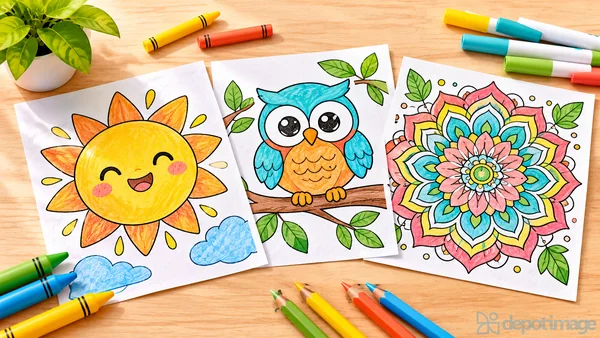
Hand a three-year-old a page packed with tiny swirls and the crayon usually goes down within a minute. Hand a nine-year-old a simple outline of a sun and you may get an eye roll. Choosing coloring pages by age helps children succeed, stay interested, and enjoy the activity. This guide explains what to look for at each stage, from toddlers to older kids, and how to match supplies to age. It also covers how to print free coloring pages at home without ink bleeding through, and what to check before you download. Use the age ranges as starting points rather than rules, since every child develops at their own pace.
Why Age Matters When Choosing Coloring Pages
A good coloring page is easy enough to finish and interesting enough to hold attention. If the design is too complex, a child may get frustrated and quit. If it is too simple, an older child may lose interest quickly. Matching the page to the child makes coloring feel like play instead of a task.
What Coloring Can Support
Coloring gives children practice holding a crayon or pencil, controlling hand movements, and recognizing colors and shapes. Many educators and therapy resources describe these skills as building blocks for later writing. Treat that as a bonus rather than a goal. The main point is enjoyment and creative freedom.
Coloring Pages by Age: What to Look For
Ages 2–3: Big Shapes and Thick Lines
Toddlers are just learning to hold a crayon, and their movements are broad. Look for:
- Large, simple shapes such as an apple, ball, car, or smiling sun.
- Thick outlines and lots of empty space.
- One main object per page.
Expect scribbles instead of neat fills, and do not worry about staying inside the lines. Short sessions work best, and it is fine to stop when interest fades.
Ages 4–5: Simple Scenes and Learning Themes
Preschoolers can handle a little more detail. Good choices include:
- Pages with a few clear objects, such as an animal in a meadow.
- Enclosed shapes that are easy to fill.
- Letter, number, and shape pages that tie into early learning.
At this stage, many children start choosing their own colors on purpose, so let them decide.
Ages 6–8: More Detail and Themes
Early school-age children enjoy themed pages and small areas.
- Scenes with a background, such as dinosaurs in a jungle or a space station.
- Pages linked to seasons, holidays, or favorite hobbies.
- Designs with patterns they can fill in.
This is a good stage to introduce colored pencils and simple blending.
Ages 9–10 and Up: Intricate Designs
Older kids often like complex pages.
- Detailed patterns and mandalas.
- Fantasy scenes with many small elements.
- Fine-line illustrations that reward patience.
Some children at this age find intricate coloring calming and a good screen-free break.
Quick Comparison
| Age | Line style | Detail level | Good tools |
|---|---|---|---|
| 2–3 | Thick, bold | Very low | Jumbo crayons |
| 4–5 | Medium | Low to medium | Crayons, washable markers |
| 6–8 | Medium to fine | Medium to high | Colored pencils, markers |
| 9–10+ | Fine | High | Pencils, fine-tip pens |
Match the Supplies to the Age
Crayons
Jumbo crayons are easier for small hands to grip and harder to break, which makes them a good fit for toddlers. Standard crayons work well for preschool and early school years.
Colored Pencils
Pencils give more control but require more pressure, so very young children often find them frustrating. They suit older children who want precise lines and shading.
Markers
Washable markers deliver bold color with little effort, but they are the most likely to soak through thin paper. They work best on heavier paper or when you place a spare sheet underneath.
A Safety Note
For young children, choose non-toxic, washable supplies, and supervise toddlers who tend to put things in their mouths.
How to Print Coloring Pages at Home
Good printing makes a big difference to how coloring pages look and feel.
Choose the Right Paper
- Standard copy paper (about 75–80 g/m², or 20 lb) works for crayons and colored pencils but can bleed with markers.
- Heavier paper (about 100–160 g/m², or 24–43 lb) handles markers better and feels more like a real coloring book page.
- Check your printer’s limits before loading thick stock, and test a single sheet first.
Adjust the Print Settings
- Print single-sided. Double-sided pages let marker ink show through to the drawing on the back.
- Print in black and white to save color ink.
- Choose fit to page if the edges are being cut off.
- Match the paper size to the file, usually US Letter or A4.
Fix Common Problems
- Faint lines: Check your ink or toner level and turn off draft or economy mode.
- Blurry lines: The source image may be low resolution. For PNG or JPG files, a 300 DPI version prints much sharper. At US Letter size, that means about 2550 × 3300 pixels.
- Marker bleed-through: Use heavier paper or slide a scrap sheet behind the page.
Tips to Keep Coloring Fun
- Let your child choose. Picking the page and colors builds ownership and interest.
- Skip the perfect result. Going outside the lines is part of learning.
- Keep sessions short for young children and follow their lead.
- Color together. A shared activity can be a calm break during busy days or school holidays.
- Display the finished pages. A fridge gallery makes children proud of their work.
Where to Find Free Coloring Pages
Before you download a page, check that it fits your needs:
- It has clear, solid outlines with enough white space.
- The difficulty suits the child’s age.
- The file is high resolution and matches your paper size.
- The usage terms fit your purpose.
Depotimage offers coloring pages and worksheets as downloadable resources for personal, non-commercial use, which suits home activities and personal learning projects. If you are a teacher or plan to use pages beyond personal use, check the terms for the specific resource first.
Conclusion
The best coloring page is one a child can enjoy right now. Choose thick, simple shapes for toddlers, simple scenes for preschoolers, richer themes for early readers, and intricate patterns for older kids. Pair each stage with suitable supplies, print single-sided on paper that fits the tools, and let children make their own choices. A little planning keeps the activity relaxed and rewarding. When you are ready to download, Depotimage’s coloring pages and worksheets are a convenient place to start for personal projects.
Frequently Asked Questions
At what age can kids start coloring?
Many children begin scribbling with crayons around ages 2 to 3, once they can hold a crayon and make intentional marks. Start with large, simple shapes and jumbo crayons, supervise closely, and keep sessions short. Skill and interest vary, so follow your child’s pace.
What paper is best for coloring pages with markers?
Choose paper heavier than standard copy paper, roughly 120–160 g/m² (about 32–43 lb), to reduce bleed-through. Test one sheet in your printer first, since very thick stock can jam some machines. Placing a spare sheet underneath also protects the table.
Can I print coloring pages on both sides of the paper?
You can, but single-sided is better for markers and heavy coloring, because ink can show through and spoil the drawing on the back. Double-sided printing is fine for crayons and light pencil use if you want to save paper.
Should kids stay inside the lines?
No. Young children are still developing hand control, and going outside the lines is normal and part of learning. As they grow, control usually improves on its own. Praise effort and color choices rather than neatness.
Can I use free coloring pages in a classroom?
It depends on the terms of each resource. Depotimage provides its downloads primarily for personal, non-commercial use, so check the specific terms before using pages in a classroom, program, or anything beyond home use. When in doubt, ask the source.